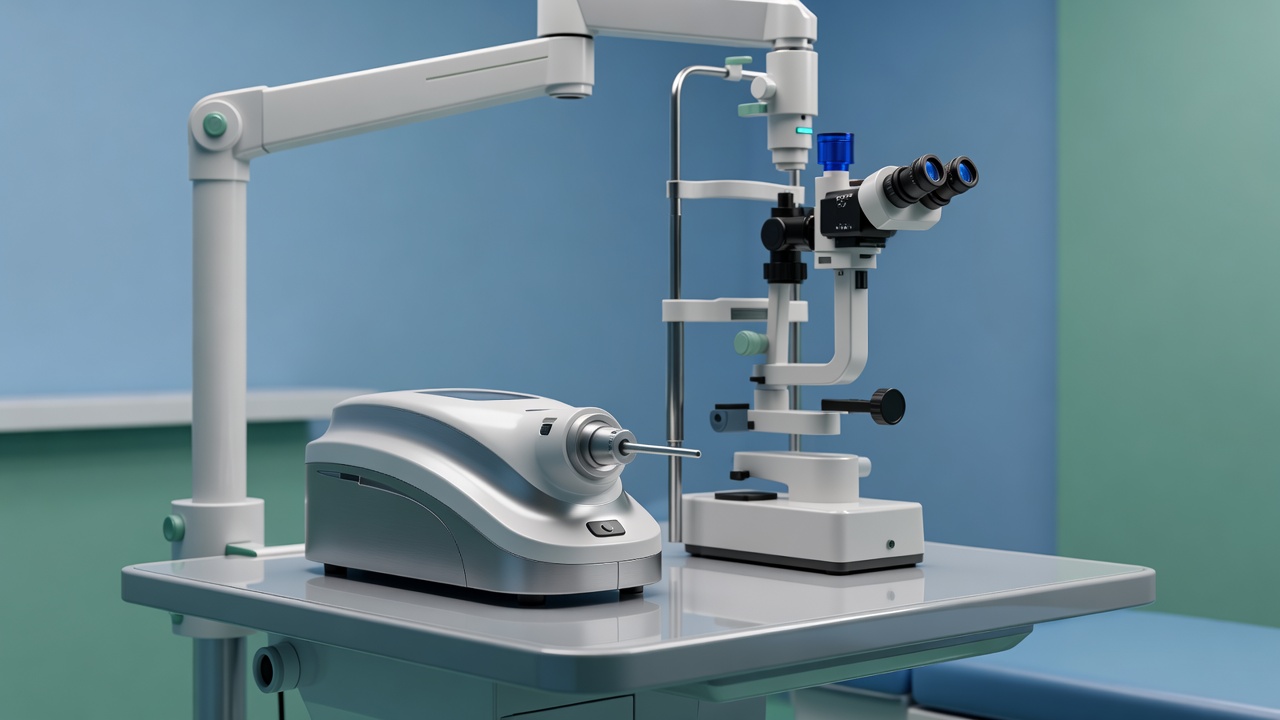
A cataract is a clouding of the eye's natural lens that develops gradually with age, dimming and blurring vision until everyday tasks — reading, driving, recognising faces — become difficult. The only effective treatment is surgery, and modern cataract surgery is one of the safest, most refined procedures in all of medicine. Understanding what happens at each stage takes much of the anxiety out of it.
Before surgery: consultation and measurements
Your journey begins with a detailed eye examination. We confirm that a cataract is the cause of your symptoms, assess the rest of the eye, and take precise measurements of its length and curvature. These measurements let us calculate the power of the intraocular lens (IOL) that will replace your clouded natural lens.
This is also when you choose your lens. Options range from standard monofocal lenses that give excellent distance vision, to multifocal and toric lenses that can reduce your dependence on glasses for reading or correct astigmatism. We will talk through which choice best fits your eyes, your lifestyle and your budget.
During surgery: quick, precise and painless
Cataract surgery today is a day-care procedure performed under local anaesthesia — usually just eye drops. You are awake but feel no pain, and the operation itself typically takes only 10 to 15 minutes per eye.
At Vista Eye Care we use phacoemulsification, a bladeless microincision technique:
- A tiny, self-sealing incision — around 2 mm — is made; no stitches are needed.
- An ultrasound probe gently breaks up the cloudy lens and removes it.
- A foldable intraocular lens is inserted through the same micro-incision and settles permanently into place.
Because the incision is so small, the eye heals quickly and the risk of complications is very low.
After surgery: recovery and follow-up
You go home the same day, usually within an hour or two of the procedure. Most people notice clearer vision within a day or two, though it continues to sharpen over the following weeks. You will be given a short course of eye drops to prevent infection and control inflammation, and a simple set of precautions:
- Avoid rubbing or pressing on the eye.
- Keep water, soap and dust out of the eye for a couple of weeks.
- Skip heavy lifting, swimming and dusty environments until cleared.
- Wear the protective shield while sleeping, as advised.
We see you for follow-up visits to confirm the eye is healing well. Any new glasses — if you need them at all — are usually prescribed a few weeks later, once vision has fully stabilised.
Is it time to consider surgery?
There is no need to wait until a cataract is "ripe." If blurred vision, glare from headlights or faded colours are interfering with your daily life, it is worth having your eyes assessed. Dr. Aman Malik has personally performed thousands of microincision cataract procedures, and our team will guide you through every step with clarity and care.